World Menopause Day - Workplace Workshop
Awareness is easy.
Support changes everything.
A 60-minute live workplace session that supports the women in your organisation — and identifies what support is needed next.
Celebrating World Menopause Day 18th October
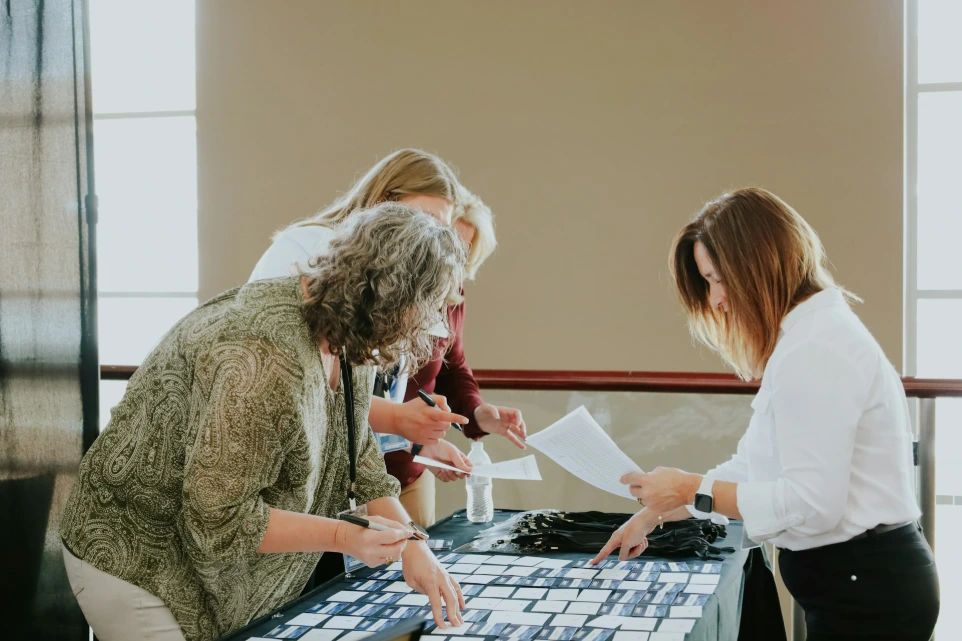
✴ Workshops: 19-23rd October 2026
Her Story, Your Realisation
She's still at her desk.
Still delivering. Still the one everyone turns to. Still the last person you'd worry about.
And right now, she's working twice as hard just to keep up.
She won't tell you that. She'll tell you she's fine. She'll laugh it off. She'll take her leave quietly and come back before anyone asks why.
Because what she's thinking is:
"I don't want anyone to think I can't do my job." "I still know how to do my job. I'm just finding it harder to function the way I used to."
"I'm exhausted from pretending I'm fine."
She’s not the exception. She’s the pattern.
67% of working women aged 40–60 who experience menopause symptoms say those symptoms have a mostly negative effect on them at work (CIPD, 2023).
Australia's own Senate Inquiry into Menopause and Perimenopause put it plainly:
"The culture of silence means that the impact of menopause on workers is hidden."
Hidden. Not absent — hidden. There's a difference, and it's likely costing you on the bottom line, team morale and retention just to sight a few.
She didn't recognise what was happening to her, either. The pain, the broken sleep, the stress she can't switch off — it didn't arrive with a label. By the time she understands what it is, she's already been masking it for months.
And because nothing looks wrong on the surface, nothing gets done — until someone has already been affected.
No dramatic exit. No formal complaint. Just the slow, quiet erosion of capacity from some of the best people you have.

THE AWKWARD GAP
If you're reading this and feeling a twinge of recognition — good. It means you care. And caring was never the problem.
Here's the truth about why this gap exists in almost every organisation: That's not a character flaw. That's a gap. And gaps can be closed.
Menopause sits in an awkward gap between health, wellbeing and workplace responsibility.
Too medical for HR. Too personal for management. Too invisible for the wellbeing report.
So it falls between the cracks
— and everyone assumes someone else is holding it.
Your managers?
Feel under-equipped to even start the conversation, so they say nothing — not from indifference, but from fear of getting it wrong.
And here's what organisations often miss: some of those managers are navigating menopause themselves — leading teams through brain fog, broken sleep and stress of their own.
The silence protects no one.
Your EAP and wellbeing programs?
Create the impression that support is already covered, so the topic never reaches the leadership agenda.
EAP is responsive 'after the issue', it's also private and confidential, therefore missing the feedback loop for organisational risk management and further development.
It is rare for EAP providers to specialise in Menopause support.
And You?
Left accountable for an outcome no one gave you a structure to achieve.
Menopause education has always been needed. Workplaces were simply never guided — and there's never been an approach that connects, informs and equips. Until now.
It's not because you don't care. There's a real gap present. And gaps can be closed.
What Is The Gap Really Costing
Left unaddressed, here's what the gap quietly costs:
Supporting her isn't a new cost. It's protecting the return on an investment you've already made.
Recruitment. Development. Years of building her expertise, her client relationships, her institutional knowledge. She carries an enormous share of your organisation's value — and menopause doesn't ask you to write that investment off. Silence might.
And later — when someone finally connects the dots — comes the thought that stings the most:
"The signs were there. Why didn't we act sooner?"
Here's the part that matters: you still have time to act.
She hasn't left. She's still doing the work she's good at. The window is open — it just needs somewhere safe to begin.
US $1.8 billion
in lost work productivity every year associated with menopause symptoms, that's the US alone! (Mayo Clinic, 2023).
A cost that's real, even when it's invisible and it's a growing global impact.
Your organisation's share of that "quiet" cost is being paid right now — it just doesn't appear on any report.
85%
Trust
you can't win back. The widening gap between what your organisation says
about people and what your people actually experience. She notices.
Her colleagues notice too.
79%
of women negatively affected by
symptoms report difficulty concentrating (CIPD, 2023).
Performance you can't see slipping. 79% That's not a motivation problem — it's a symptom. And the effort she spends masking it is effort stolen from the work itself.
1.5x
Replacing her costs 1.5x the annual salary according to Jobs and Skills WA, that's far more than
supporting her.
Capability you can't replace. The experienced woman who reduces her hours, steps back, or leaves — taking her knowledge, her relationships, and her place in your succession pipeline with her.
Read This Before You Decide Anything
❌ "We already have an EAP —
this is covered. " The impression of coverage is the gap. An EAP
is reactive and confidential: it supports an individual after she
reaches out — if she ever does. It doesn't change the workplace factors wearing
her down. Coverage isn't capability.
❌ "Menopause is a private
medical issue, not a workplace one."
No one is asking you to treat symptoms. But when pain, sleep and stress affect concentration, stamina, confidence and careers at work, it becomes a people issue — and you don't need clinical knowledge to respond well. You need a starting point.
❌ "We'll mark World
Menopause Day — a morning tea, some posters."
Awareness without action can quietly confirm to the women in your organisation that this is a topic for the newsletter — not the workplace. A morning tea is easy. Support is what she'll remember.
❌ "Our managers will make it
awkward. We might make it worse."
Awkwardness comes from having no structure, not from the topic itself. And right now, no one is asking your managers to do anything — this session starts with the women, in a safe and supported space.
Doing nothing is what actually makes it worse.
❌ "If it were a real
problem, she'd tell us."
Silence is the symptom. She's not quiet because everything is fine. She's quiet because she's scared that if she says something, she'll be seen differently.
The Solution To The Gap
Introducing Working Well Through Menopause, World Menopause Day Session
Pain, sleep and stress aren't side notes — 68% of women negatively affected by menopause symptoms report increased stress at work (CIPD, 2023). This session starts where it hurts most, and what it costs most.
Start with understanding. Learn from your people. Build from there.
Working Well Through Menopause is a series of eight live workplace sessions that supports the women in your organisation — and helps you see, clearly, what appropriate workplace support can look like.
No new policy required. No clinical program. No managers suddenly expected to be menopause experts.
Featured World Menopause Day session:
Pain, Sleep, Stress & Menopause at Work
A 60-minute live workplace session (plus extra 15 minutes Q&A) that gives the women in your organisation three things they rarely get at work:
1
Understanding
Evidence-informed education on how pain, sleep and stress interact with menopause, and why it can feel like you're working twice as hard just to keep up.
2
Practical strategies
Personal, real-world approaches she can use straight away — not generic wellness tips.
3
A model of good support
Supportive workplace responses demonstrated in the room, so everyone leaves knowing what appropriate support actually looks like.
4
Get Delivered
And you receive something most sessions never give you: a clear picture of what your own people need next.
What's Inside the Session
Your World Menopause Day session includes:
A 60-minute live workplace session
Evidence-informed education on pain, sleep, stress and menopause at work
Practical
personal strategies
Realistic approaches participants can apply immediately
Supportive
workplace responses
What good support looks like, modelled in the room
Anonymous
Q&A
Participants ask what they've never felt safe asking, with no disclosure required. Designed to work in any room — mixed, large or small — because no one is ever put on the spot.
Working
Well Companion Resources
She leaves with tools in hand, not just notes
Anonymous
participant feedback
Honest reactions, without anyone being put on the spot
A concise organisational Insight Summary
For you: what your people need, and what support may be worth building next
The Outcome

For the women in the room
Including your managers: Some of the women in that room lead teams of their own.
They get the same understanding, strategies and relief as everyone else — and they stop having to manage their own menopause in secret while managing everyone else's workloads.
She understands what's happening to her — many for the first time. She leaves with practical strategies, resources in hand, and the relief of knowing she's not the only one.
For your organisation
An evidence-informed picture of what your people actually need — not guesswork, not a generic benchmark.
A low-awkwardness starting point that required no new policy and no one being singled out.
And a retention signal money can't buy: the strongest message you can send a valued employee is that you'll support her through the seasons of her working life — not just the easy ones.
For what comes next
the insights summary shows you whether a manager-focused follow-up session would help — and what it should cover.
And there's evidence for this pathway: Australian workplace research found that greater supervisor support was associated with lower menopause symptom reporting among working women.
Support changes outcomes. When the time comes, a manager-focused session isn't a leap — it's the evidence-based next step, built on what your people actually said.
One session. Support for her. Insight for you. Investment protected.




Why You Can Trust This Session
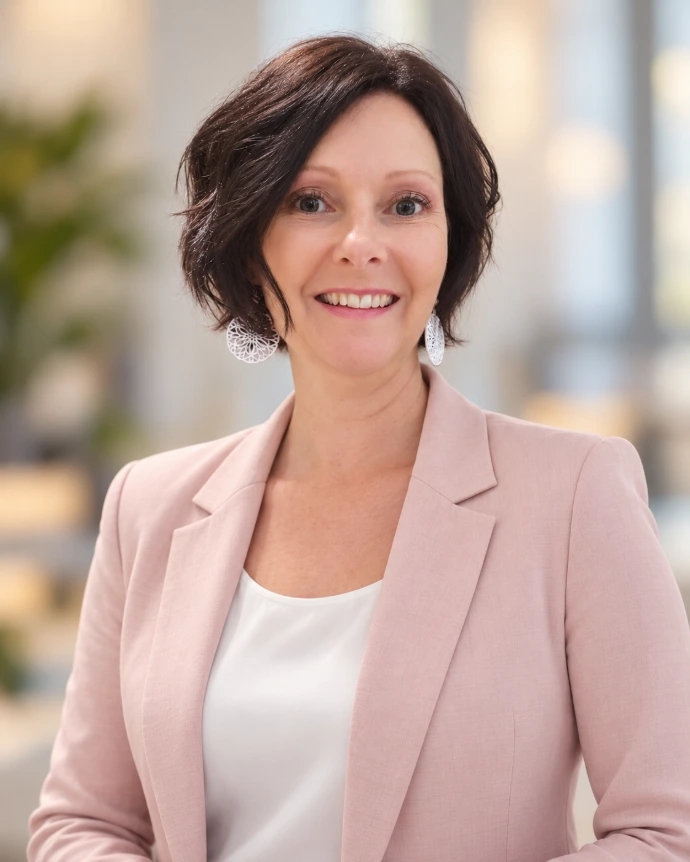
Your Facilitator - Kerry Frisina
Founder & Lead Facilitator, Workplace Menopause Support
Kerry Frisina has spent more than 20 years helping people and organisations navigate significant change — as a facilitator, coach and therapist across business, leadership, training and people development.
She has guided organisations through major upheaval — the kind of change that tests culture, trust and capacity — so she knows what change does to people, and what people need to move through it well.
Her approach is the combination, this topic has been missing:
- Deeply human — a therapist's care for the person in front of her. Every session is a safe place before it's an educational one.
- Practically structural — two decades of developing and implementing organisational processes. She thinks in pathways, not just conversations.
- Evidence-informed — current workplace and health research, translated into plain language and strategies people can actually use.
Kerry created Working Well Through Menopause because she kept seeing the same gap: women struggling silently, leaving jobs they used to enjoy and felt secure in and organisations either genuinely willing to help or menopause in their workplace was a complete blindspot — with nothing bridging the gap through this transition of life.
This session is that BRIDGE — delivered by someone who has spent 20 years building exactly this kind of bridge.
The evidence behind this page and worplace workshops:
- CIPD, Menopause in the Workplace: Employee Experiences, 2023 (593 symptomatic working women, aged 40–60)
- Mayo Clinic, 2023 — estimated US work-productivity loss associated with menopause symptoms
- Australian workplace research — supervisor support and menopause symptom reporting
- Evidence to the Australian Senate Inquiry into Menopause and Perimenopause, 2024
- Harvard Women's Health & Wellbeing: Menopause Certification
- Australian Menopause Society
Your Questions, Answered
No. This session is for the women in your organisation — it meets them where they are, with education and strategies for them. The manager-specific session is a separate, optional follow-up, and the insights summary will tell you if and when it's worth doing.
Because this isn't another program to bolt on — it's a starting point that tells you what your people actually need. Your EAP supports individuals after they reach out. This reaches the women who never would.
They don't have to. The Q&A is anonymous, participation is at each person's comfort level, and no one is asked to disclose anything. The safest session is one where sharing is optional — this is built that way.
The World Menopause Day session is $1,500 with code WMD26 — less than most teams spend on a single day's catering for an all-staff event. And unlike catering, it tells you exactly where your people need support next.
You don't need to have all the answers. That's what this session is for — and it's backed by our Working Well Commitment (below).
Because policy built on guesswork gathers dust. Start with understanding, learn from your people, and build support that actually fits — the insights summary gives you the evidence to do exactly that.
Then the session is doing its job. Most men in the room are managers, colleagues and partners — and they leave with the same understanding and language. This is professional, evidence-informed workplace education, not a private support group: the content is respectful and workplace-appropriate, and the anonymous Q&A means no one is ever singled out. In our experience, when male colleagues take menopause seriously, the culture shifts faster — because support stops being a "women's issue" and becomes a workplace capability.
Often, they need it most. A manager navigating her own symptoms while leading a team is doing two jobs at once — and usually telling no one. The session gives her the same understanding and strategies as everyone else, and it lifts a weight: she doesn't have to be the expert. She just gets to be a person who understands. If the insights summary shows a manager-focused session would help your organisation, that's the natural next step.
🎗️ World Menopause Day Session
Pain, Sleep, Stress & Menopause at Work
Investment: $1,950 World Menopause Day exclusive $1,500 with code WMD26 when booking a session between 19-
What's included
- Revolutionary & Engaging Workplace Menopause Workshop
- 60-minute live onsite workplace session + dedicated 15 minutes Anonymous Q&A
- Evidence-informed education, practical strategies & supportive workplace responses
- Working Well Companion Resources
- Anonymous participant feedback
- Concise organisational Insights Summary
- World Menopause Day exclusive rate of $1500